Feeding
What Food Containers Are Safe for Storing Baby Food and Purees?
A practical guide to choosing safe, easy-to-clean containers for homemade baby purees, batch cooking, and daily feeding in Pakistani kitchens.
5 min read
This guide is general information for parents, not medical advice. Every baby is different — for anything about your baby's sleep, health, or feeding, follow the guidance of your pediatrician.
Why container choice matters more than the recipe
Most first-time parents spend hours researching what to cook — mashed banana, boiled daal, steamed apple — but very little time thinking about what it's stored in. Yet the container touches the food for hours, sometimes overnight in the fridge, and that contact matters.
A poor container can leach odours into food, crack under repeated washing, or trap moisture in ways that encourage bacteria. None of this is dramatic, but it's the kind of quiet detail that adds up over weeks of daily use.
The good news is that once you understand what to look for, choosing well becomes simple and doesn't need to be expensive or complicated. It's less about buying the most premium option available and more about consistency — the same reliable set, used and washed the same careful way, every single day.
What 'baby-safe' actually means in practice
There's no single magic material that makes a container automatically safe — it's a combination of factors. Look for containers that are smooth-surfaced with no rough seams where puree can hide, and that seal tightly enough to prevent leaks in a bag or fridge shelf.
Avoid anything with a strong plastic smell out of the box, visible scratches, or a lid that doesn't close firmly — these are signs of lower-quality material that won't hold up to repeated heating and washing.
If you're ever unsure whether a specific container is appropriate for a particular use — like microwave reheating — it's worth checking the manufacturer's guidance rather than assuming. When in doubt, transfer food to a dish you already know is safe for that purpose. This is a good habit to build early, since your baby will move from single-ingredient purees to more complex mixed meals fairly quickly, and the containers need to keep pace with that change.
Portion size and shape make daily life easier
Newborn purees start small — a few spoonfuls — so oversized containers mean more air space and food drying out at the edges. As babies grow into toddlers eating fuller meals, container needs shift toward slightly bigger, stackable options.
Look for a set with a few different portion sizes rather than one uniform size. This lets you freeze small batches for early feeding and pack fuller meals later without needing an entirely new set.
Stackable, uniformly shaped containers also save real fridge space — something every joint-family kitchen with shared shelves will appreciate, especially when the same fridge is also holding milk, dahi, and everyone else's leftovers. A tidy, labelled stack is easier for anyone in the house to reach for when you're not around to explain which bowl is which.
Freezing, reheating, and the realities of load-shedding
Batch-cooking and freezing purees is common practice because it saves time, but it only works if the containers you use are actually meant to go from freezer to reheat without cracking or warping.
In cities with frequent load-shedding, fridge and freezer temperatures can fluctuate more than parents realise — a few hours without power on a hot Karachi afternoon is very different from the same gap during a mild Islamabad winter night. Containers with secure, well-fitted lids reduce the risk of freezer burn or spoilage during those gaps, and make it easier to tell at a glance if a seal has loosened.
Always reheat thoroughly and test the temperature yourself before feeding — a container that's microwave-safe still needs the food inside stirred and checked, since heating can be uneven, and what feels warm to a spoon may still have hot pockets that a baby's mouth is far more sensitive to than your fingers.
Washing habits that extend a container's life
Hand-washing after every use is still the norm in most Pakistani households, and it's genuinely one of the better habits for baby items — it lets you inspect the container each time for cracks, cloudiness, or lingering smell.
Avoid soaking in very hot water for long periods if the container isn't rated for it, and dry fully before sealing shut, since trapped moisture is what actually causes odour build-up over time, not the material itself.
Rotate between a few containers rather than relying on just one or two — it reduces wear on any single piece and gives you backup on days when something is still drying on the rack, particularly if you're sun-drying alongside baby clothes and bottles as many households do.
Signs it's time to retire a container
Even a well-cared-for container doesn't last forever, and it's worth checking your set every few months rather than waiting for something to go visibly wrong. Cloudiness that won't wash out, a lid that no longer clicks shut firmly, cracks along the base, or a smell that lingers after washing are all signs a container has done its job and should be replaced rather than pushed further.
This is especially worth watching for pieces that get reheated often, since repeated heat cycles are usually what wears a container down faster than washing alone. Keeping an eye on this is a small, low-effort habit that avoids the bigger inconvenience of a cracked container leaking in the freezer or a seal failing during an outing.
Building a simple, complete feeding kit
Food containers rarely work alone — most parents end up pairing them with an insulated bag for outings, a bottle case for formula or milk on the go, and a feeding cushion for calmer feeding sessions at home. If you're assembling a full kit, our comparison of a food bag versus a bottle case walks through which one actually suits daily outings versus quick errands, and our guide to choosing the right feeding cushion covers what makes feeding sessions calmer at home — though it's worth noting a feeding cushion is meant to support feeding posture, never for sleep or unsupervised use.
For the container itself, a small rotating set in a couple of sizes is usually enough for the first year — you don't need a large collection, just a reliable one. You can browse a focused range of baby food containers built for daily washing and storage rather than for looks alone.
Whatever you choose, the goal is the same: food that stays fresh, a container that's easy to clean without fuss, and one less thing to worry about in an already busy day.
Frequently asked questions
- Can I use any plastic container for baby puree, or does it need to be special?
Not every container is suitable — look for ones without a strong plastic odour, with smooth interiors and tight-fitting lids. If a container feels flimsy, scratches easily, or you're unsure about its safety for reheating, it's better to use one specifically meant for food storage.
- Is it safe to freeze baby puree in the same container I'll reheat it in?
Many containers are designed to go from freezer to reheating, but not all are — check that the specific container you're using is rated for both. If you're unsure, transfer frozen puree to a container you know is safe for heating before serving.
- How long can homemade puree stay in the fridge?
This depends on the ingredients and your fridge's consistency, especially during load-shedding when temperatures can fluctuate. It's best to discuss general food-safety timelines with your pediatrician and always trust your senses — if something smells or looks off, don't serve it.
- How many containers do I actually need to start?
A small set in two or three sizes is usually enough to begin — smaller portions for early purees and slightly larger ones as your baby eats more. You can always add more once you understand your baby's actual eating pattern.
- What's the best way to clean containers so they don't smell over time?
Hand-wash after every use, avoid prolonged soaking in very hot water unless the container is rated for it, and make sure it's completely dry before sealing the lid. Trapped moisture, not the material itself, is usually what causes lingering odours.
Pieces mentioned here
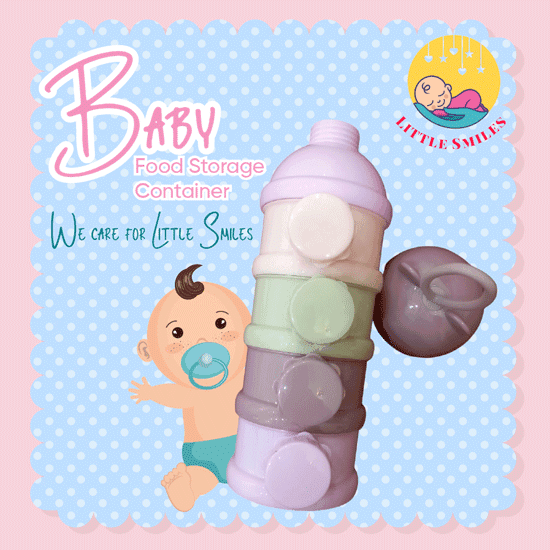
Baby Food Storage Container 1
Rs. 2,926
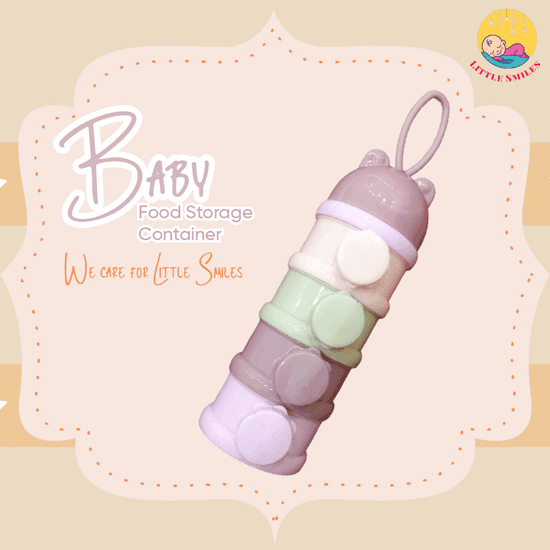
Baby Food Storage Container 2
Rs. 2,862
Keep reading
Buying Guide
Are Dino and Deer Print Bodysuits Safe and Comfortable for My Baby?
What makes printed bodysuits safe for babies in Pakistan's climate—fabric quality and care matter more than the cute design.
Buying Guide
What Bottle Case Should I Buy for My Baby's Bottles?
A practical guide to choosing the right bottle case for daily outings, doctor visits, and travel in Pakistan's heat — what actually matters and what to skip.